Elasticache
Introduction
- Fully managed Redis or Memcached instances
- Caches are in-memory databases with high-performance and low latency
- Helps to reduce load from databases
- Helps to make your application stateless
- Requires that your application be architected with a cache in-mind
Redis
- Supports multi-AZ with auto-failover
- Supports read-replicas to scale out reads
- Backup and restore features
- Supports sets and sorted sets
Memcached
- Multi-node for partitioning of data (Sharding)
- None of the features that Redis supports
Caching Implementation Considerations
- Is it safe to cache the data?
- Data may be out of date (eventually consistent)
- Is caching effective for that data?
- Patterns: data changing slowly, few keys are frequently updated
- Anti patterns: data changing rapidly, all large key space frequently needed
- Is data structured for caching?
- example: key value caching or caching of aggregations result
Caching design patterns
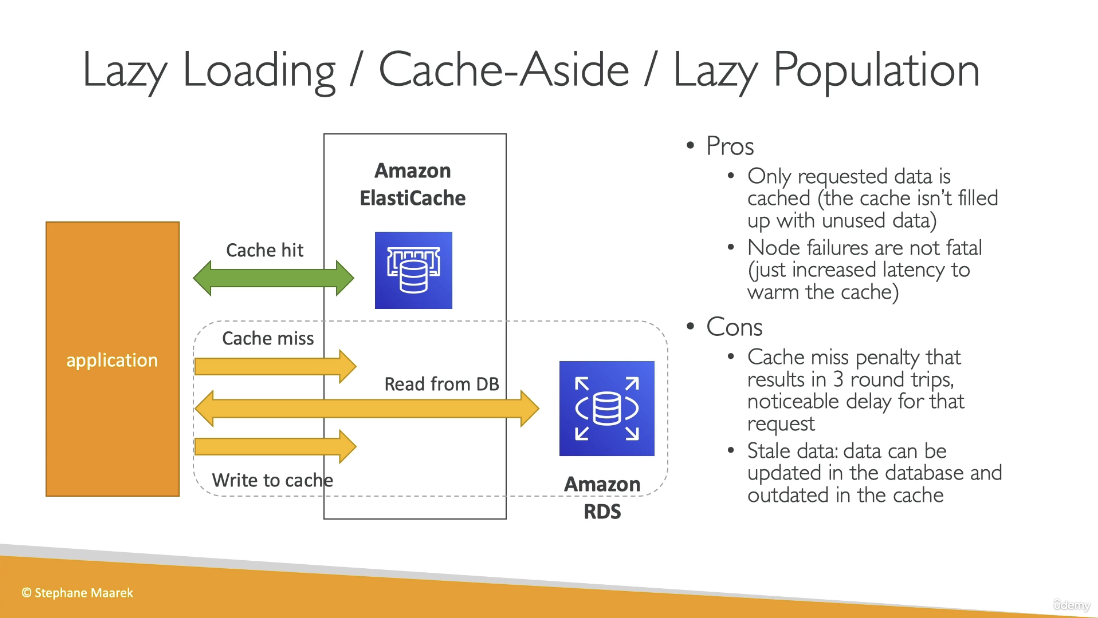
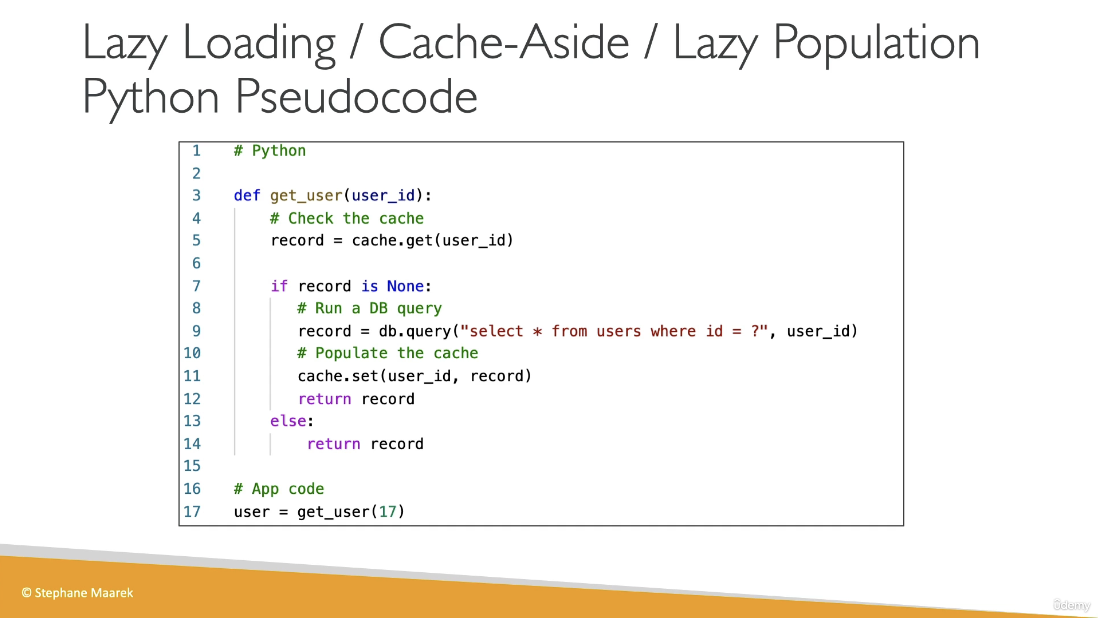
Lazy Loading / Cache-Aside / Lazy Population
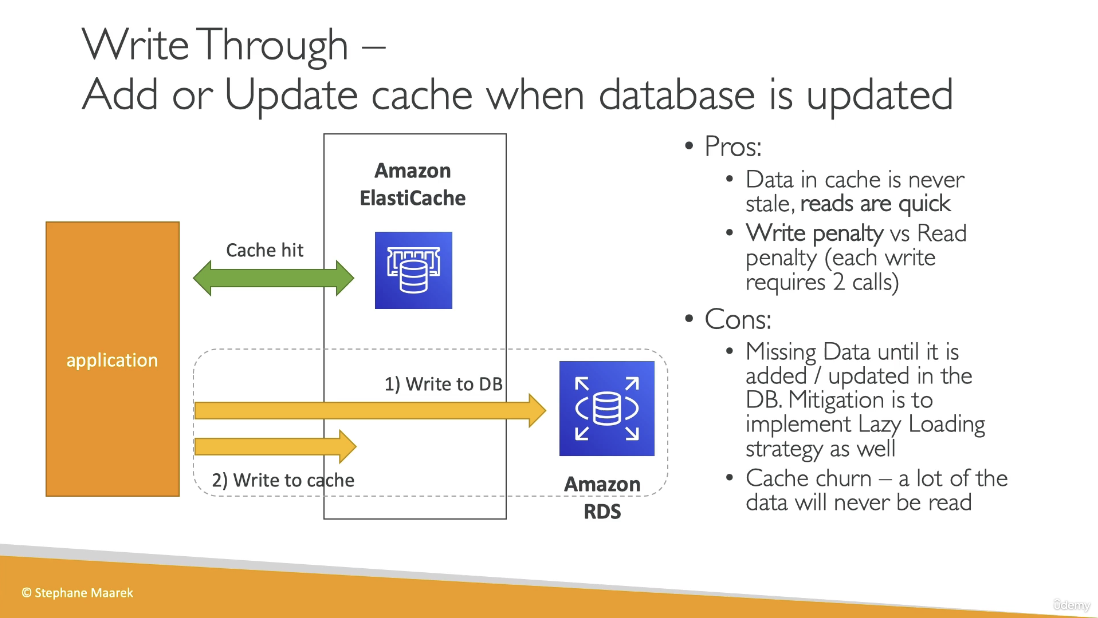
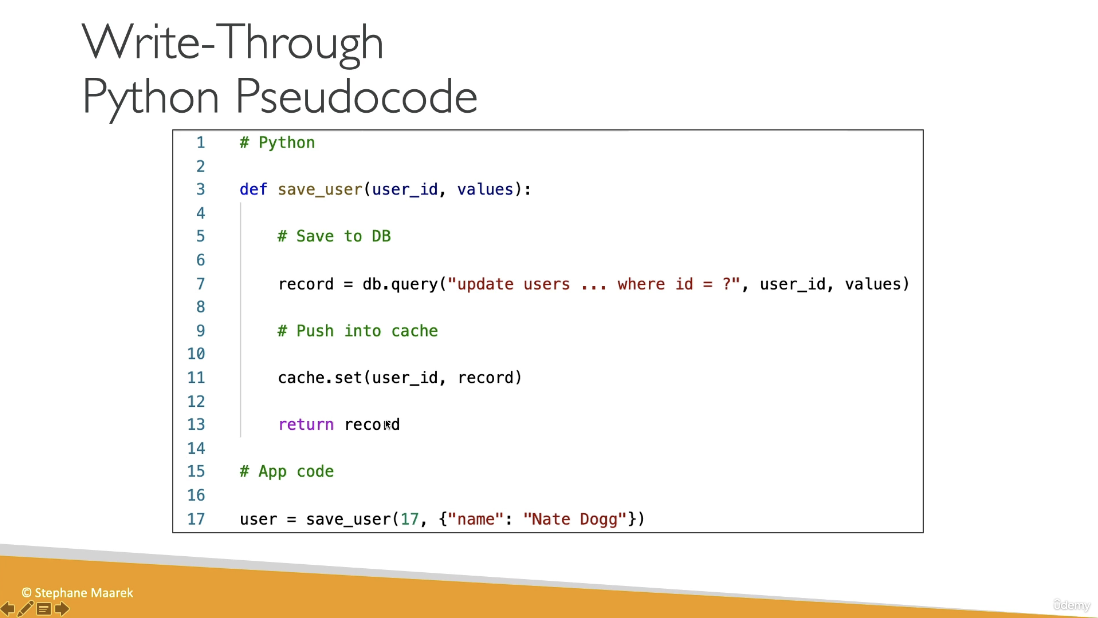
Write-through
Cache Evictions and TTL
- Cache eviction can occur in 3 ways:
- You delete the item in the cache
- Item is evicted because the memory is full and its not in use (LRU)
- The TTL (time to live) has expired
- TTL can range from a few seconds to days