CloudFront
-
Content Distribution Network (CDN) creates cached copies of your website at various Edge locations around the world
-
Content Delivery Network (CDN)
-
A CDN is a distributed network of servers which delivers web pages and content to users based on their geographical location, the origin of the webpage and a content delivery server
-
Can be used to deliver an entire website including static, dynamic and streaming
-
216 points of presence globally
-
DDoS protection since it is a global service. Integrates with AWS Shield and AWS WAF
-
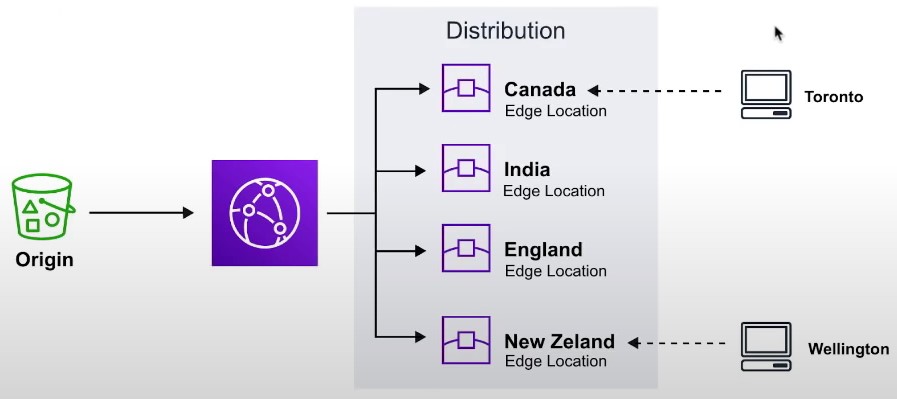
Requests for content are served from the nearest Edge Location for the best possible performance
-
-
CloudFront Core Components
-
Origin
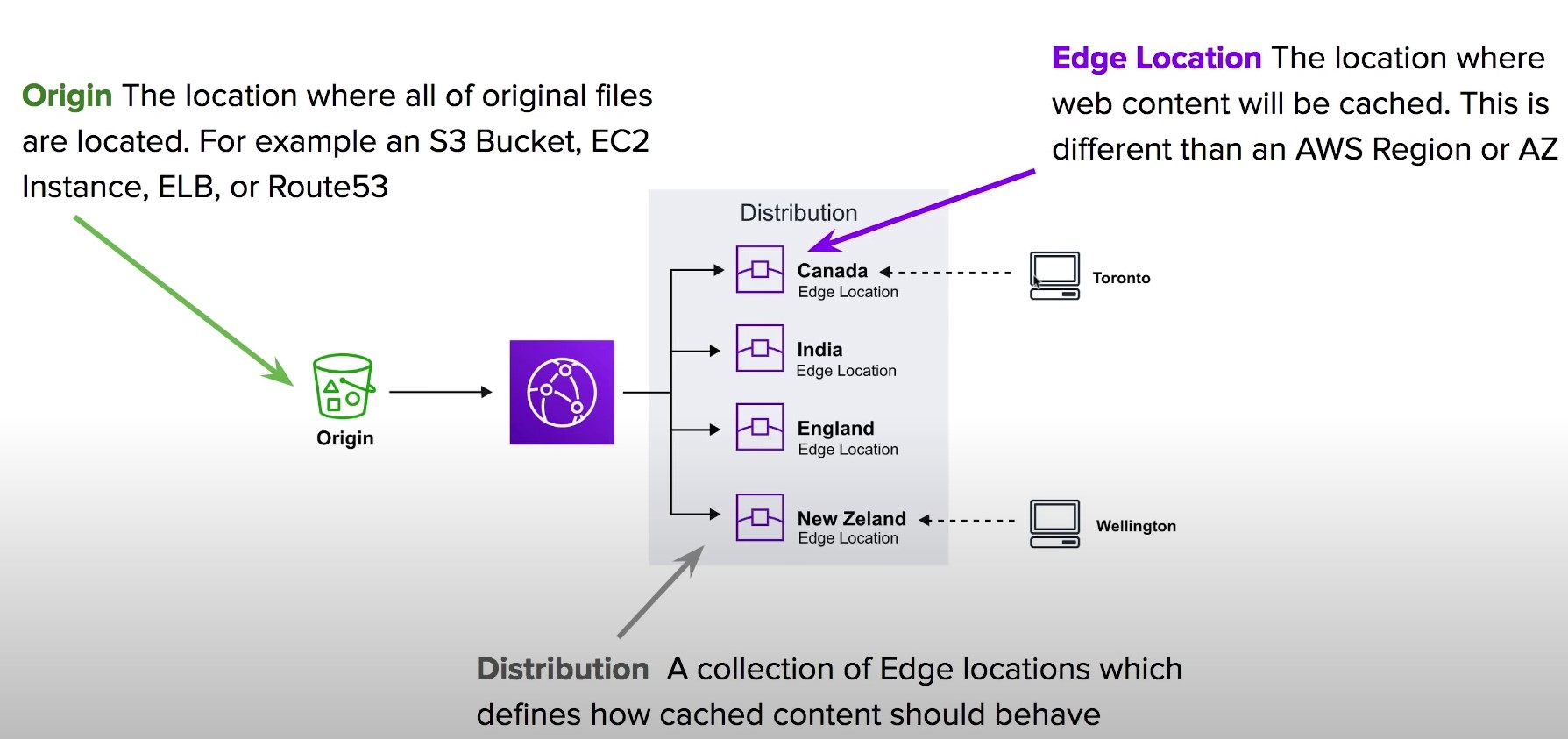
- The location where all of original files are located. For example an S3 Bucket, EC2 Instance, ELB or Route53
-
Edge Location
- The location where web content will be cached. This is different than an AWS Region or AZ
-
Distribution
-
A collection of Edge locations which defines how cached content should behave
-
CloudFront Distributions
- A distribution is a collection of Edge Location. You specific the Origin eg. S3, EC2, ELB, Route53
- It replicates copies based on your Price Class
- There are two types of Distributions
- Web (for Websites)
- RTMP (for streaming media)
- Behaviors
- Redirect to HTTPs, Restrict HTTP Methods, Restrict Viewer Access, Set TTLs
- Invalidations
- You can manually invalidate cache on specific files via Invalidations
- Error Pages
- You can serve up custom error pages eg 404
- Restrictions
- You can use Geo Restriction to blacklist or whitelist specific countries
Lambda@Edge
-
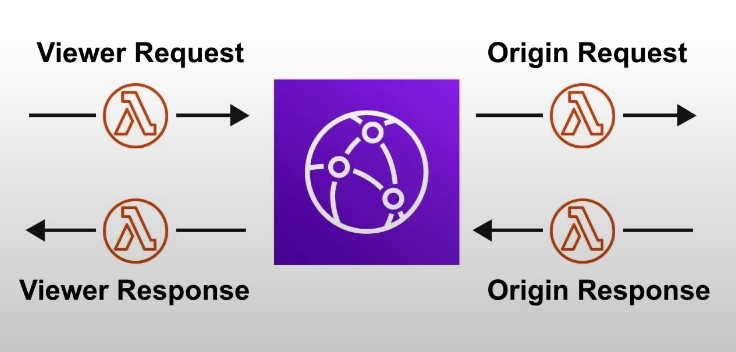
Lambda@Edge functions are used to override the behavior of request and responses
-
Lambda@Edge lets you run Lambda functions to customize the content that CloudFront delivers, executing the functions in AWS locations closer to the viewer.
-
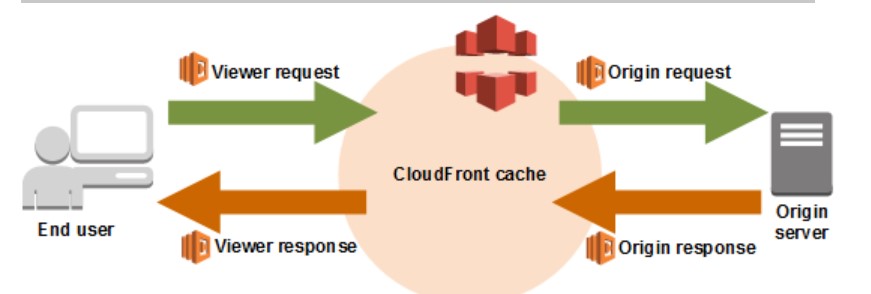
The functions run in response to CloudFront events, without provisioning or managing servers. You can use Lambda functions to change CloudFront requests and responses at the following points:
-
The 4 Available Edge Functions
- Viewer Request
- When CloudFront receives a request from a Viewer
- Origin request
- Before CLoudFront forwards a request to the origin
- Origin response
- When cloudfront receives a response from the origin
- Viewer response
- Before CLoudFront returns the response to the viewer
- Viewer Request
CloudFront Protection
- By Default a Distribution allows everyone to have access
- Original Identity Access (OAI)
- A virtual user identity that will be used to give your CloudFront Distribution permission to fetch a private object
- Inorder to use Signed URLs or Signed Cookies you need to have an OAI
- Signed URLs
- (Not the same thing as S3 Presigned URL)
- A url with provides temporary access to cached objects
- (Not the same thing as S3 Presigned URL)
- Signed Cookies
- A cookie which is passed along with the request to CloudFront. The advantage of using a Cookie is you want to provide access to multiple restricted files. eg. Video Streaming